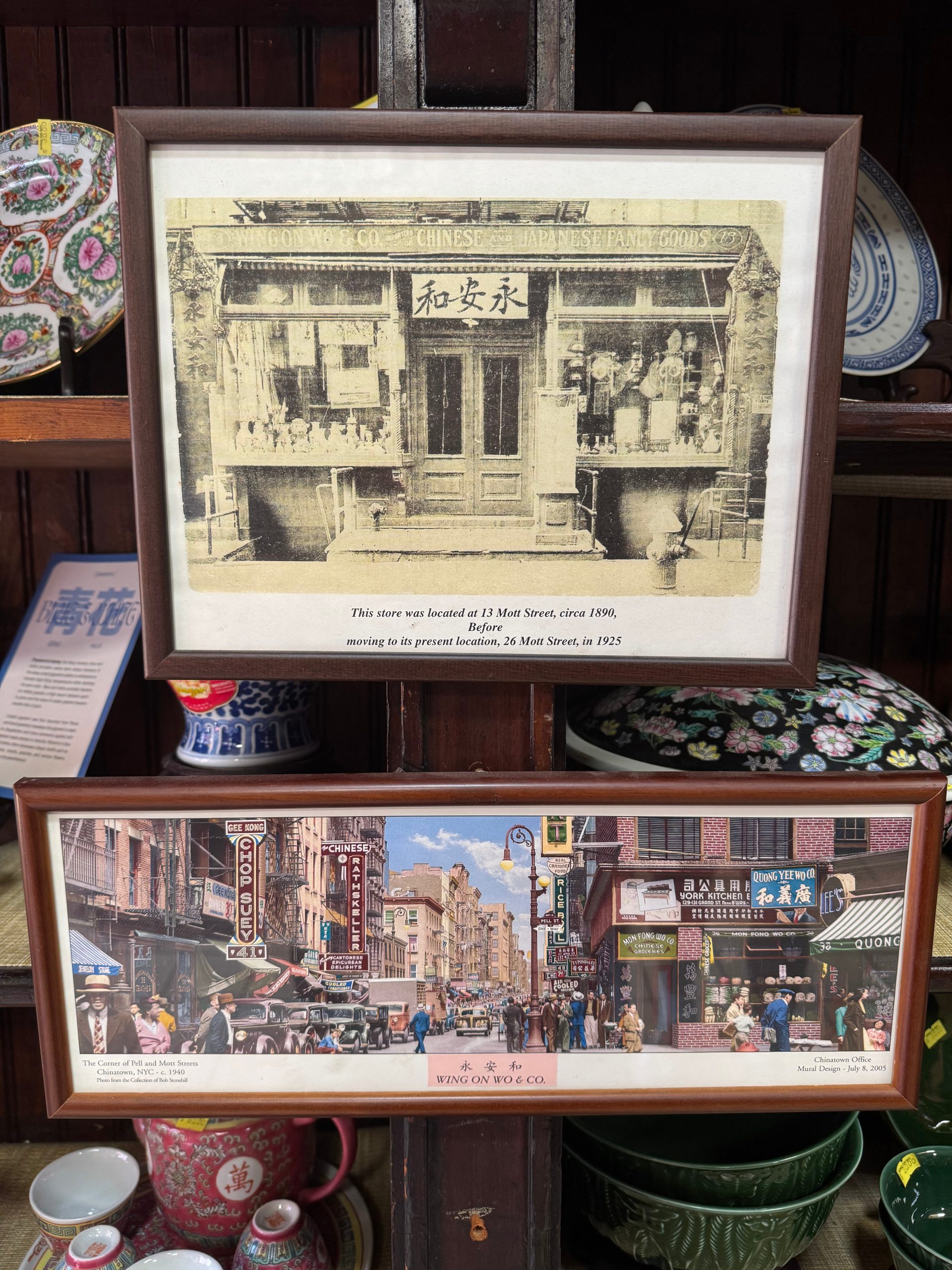
Wing on Wo

Wing on Wo
26 Mott St
New York, NY 10013
(212) 962-3577
Open 12:00 – 5:00 pm Wed – Fri, 1:00 – 5:00 pm Sat – Sun
Wing on Wo is the oldest shop in Chinatown that continues to thrive, selling a range of porcelain and other ceramic items imported from China. Today, we had the pleasure of interviewing Gary, the previous owner and father of the current owner, Mei.
Q. Can you introduce yourself and tell us about Wing On Wo? What do you sell and specialize in?
Gary: My name is Gary Lum, and I’m a part of a family that owns Wing On Wo. The family property and business are 100 years old this year. I got married into my wife’s family, who hold the five-generation legacy of this business, 45 years ago.
Wing On Wo began in 1890 as a Chinese American grocery store, like every other store in the Chinatown that I grew up in. The business was in a rental space, and in 1925, the business was brought over to this physical location. We have been running the business here since, and we now sell porcelain.
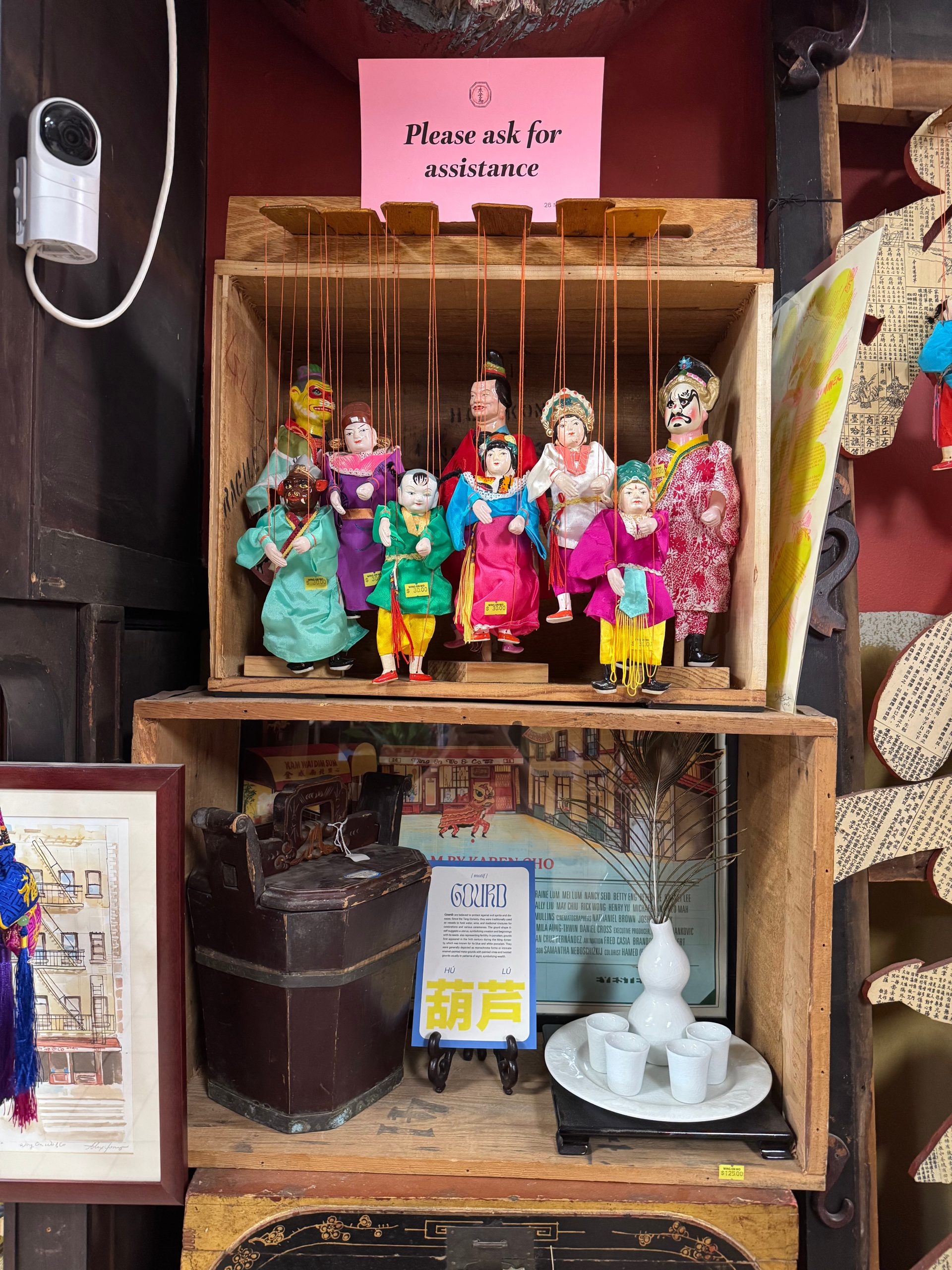
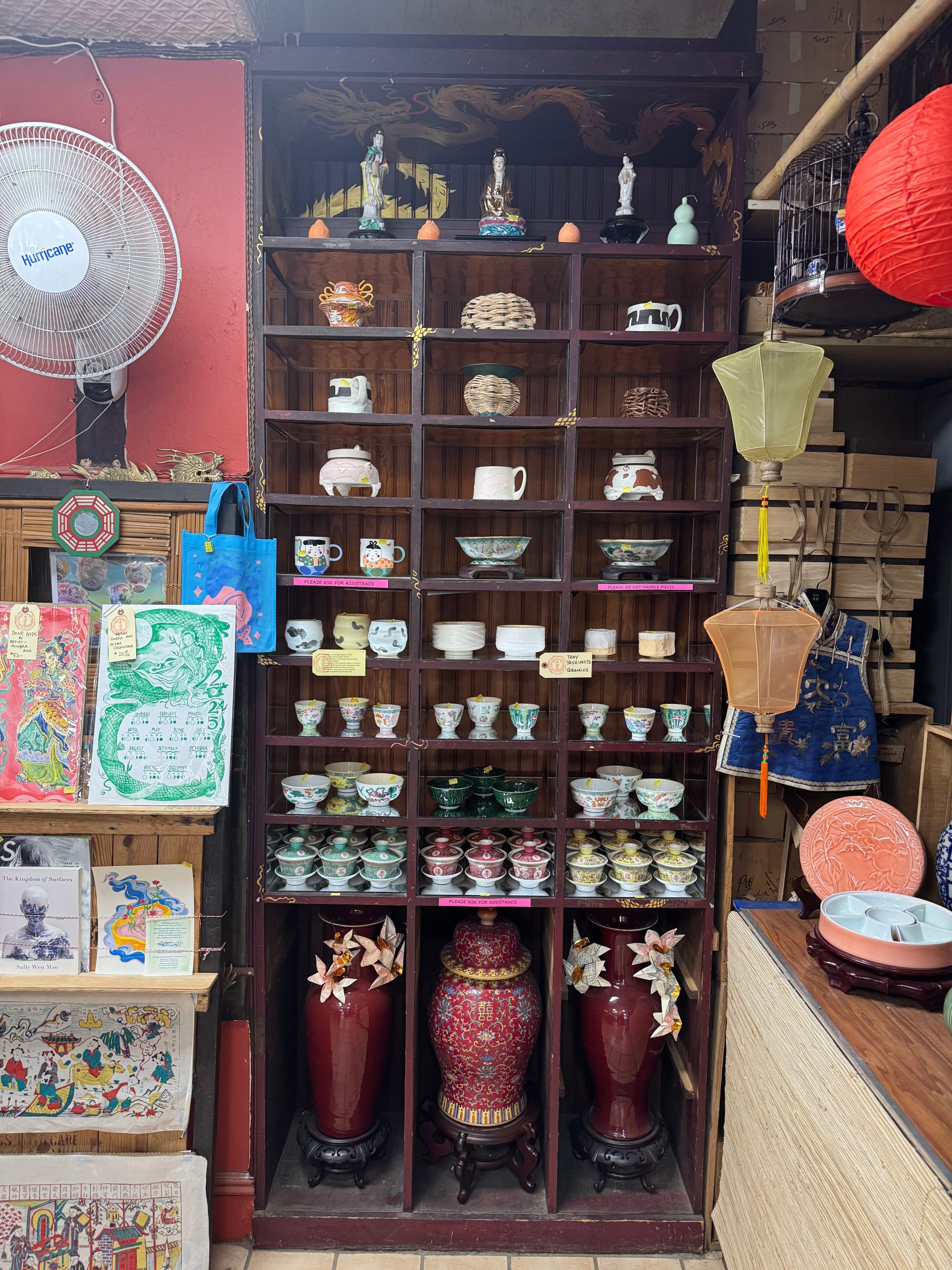
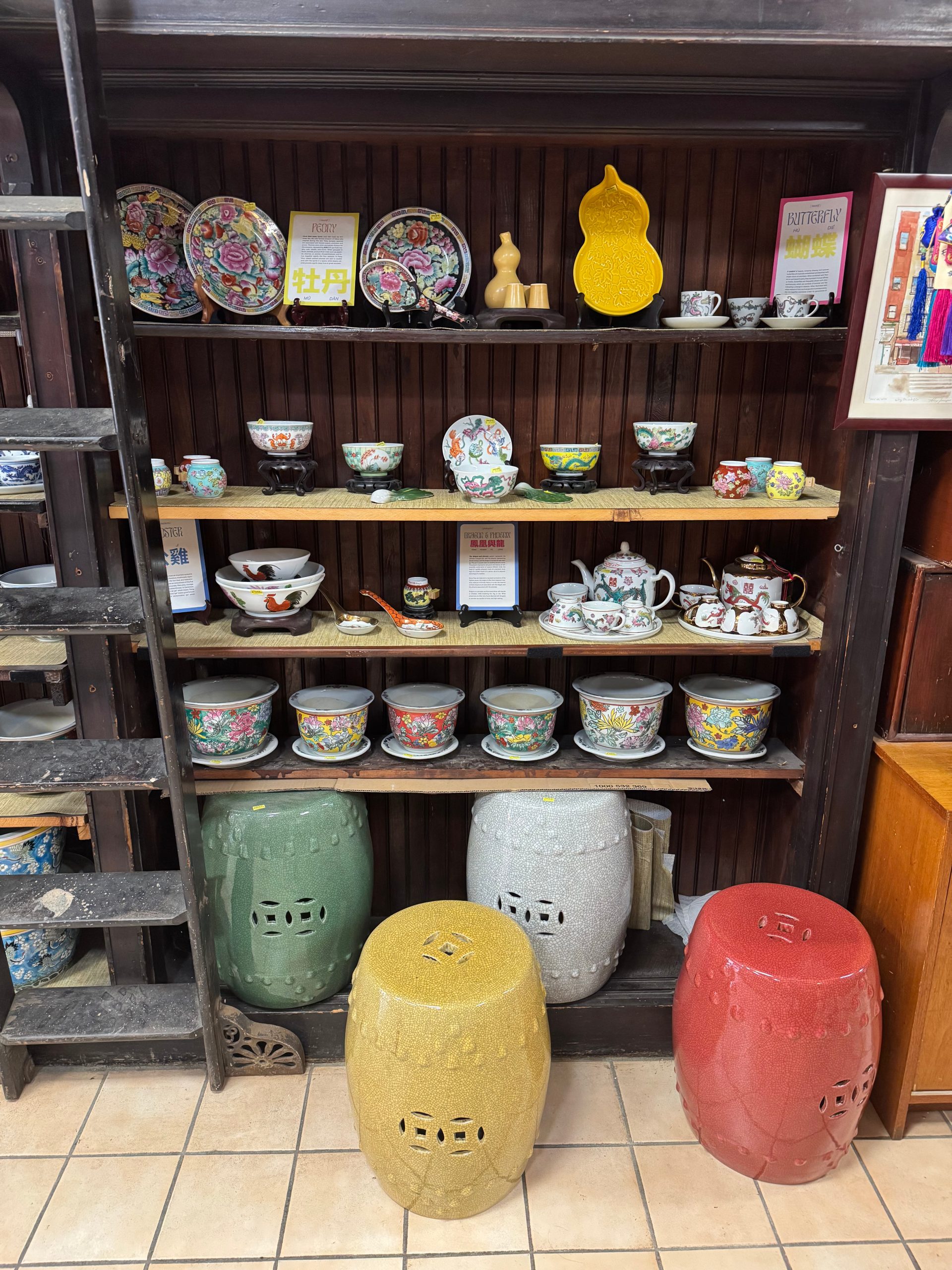
The porcelainware that we offer is classic and traditional, but also updated in the way that we’ve invited artists and ceramists to collaborate on traditional and classic patterns, symbolism, and designs on painted porcelainware that the Chinese like to do. American porcelainware is decorated on the very rims and edges of the bowls and plates, but Chinese porcelainware uses the entire palette of the dinnerware to lay down the symbolism of good luck, good health, prosperity to offer positive messages and to remind immigrants of hopefulness, faith in the world, and a sense of belonging and rootedness in their new land.
Q. How has the business changed or stayed the same across these five generations?
Gary: As I mentioned, across the hundred years that my mother-in-law’s father and grandfather handed her stewardship of the business, it went from being a typical Chinese-American grocery store to a specialty porcelainware shop that was supplied by brokers’ showrooms out of Hong Kong. As a grocery store, we had a commercial kitchen in the back of our store where we roasted pigs for many Chinese that migrated to Chinatown. In 1965, the business changed– My mother-in-law and father-in-law, who met in Chinatown and worked in civil service in New York City, took over the business when my mother-in-law’s father suddenly passed away in the shop. He had a heart attack. So this business was passed forward.
When I was growing up, Chinatown was only two by three blocks, so my father-in-law traveled with my mother-in-law to Hong Kong, where he lived until he was 15 or 16 years old. He always wanted to go back to Hong Kong to see where he grew up, go back to his neighborhood and walk through it, see his school, and just get the whole feel of it. In 1984 and 1985, I went on a buying trip with my mother-in-law and father-in-law. On the trip, they signed contracts with broker showrooms that sold porcelainware, and converted this Chinese-American grocery store that offered everything I spoke of, including barbecue on the weekends, into the porcelain shop it is today.
Mother-in-law and father-in-law kept a good supply of quality porcelainware down in this very basement that we’re speaking of. My daughter Mei took over the business nine years ago, and she’s continued that line of product. She’s made it more accessible by educating the public, made it more mainstream, and made it more accessible to younger generations.
Q. Could you describe some of your favorite or most historically significant porcelain items currently in the shop?
Gary: A lot of the porcelain that we offer and have imported has been made in China, specifically Jiangxi province in Jingdezhen city, which is a city in China that provided porcelainware to the emperors of China. The most significant are those traditional classic patterns.
In the Western market, we use a lot of plates and flat serving dishes. In Asian homes, we mostly use bowls, and a lot of the dinnerware that the Chinese use is utilitarian. I would say the Western market also is utilitarian, but in a more decorative way. So the most significant items we have are ones that are more classic and traditional, such as the rose medallion, which offers rosettes, gold, and different hand paintings. These often have courtyards on them, representing family estates where the sons and daughters were supporting their families, meaning the rose medallion decoration has been hand-painted with a unique intergenerational experience that is reflected in the older patterns in museums that carry classic Chinese antique wear.
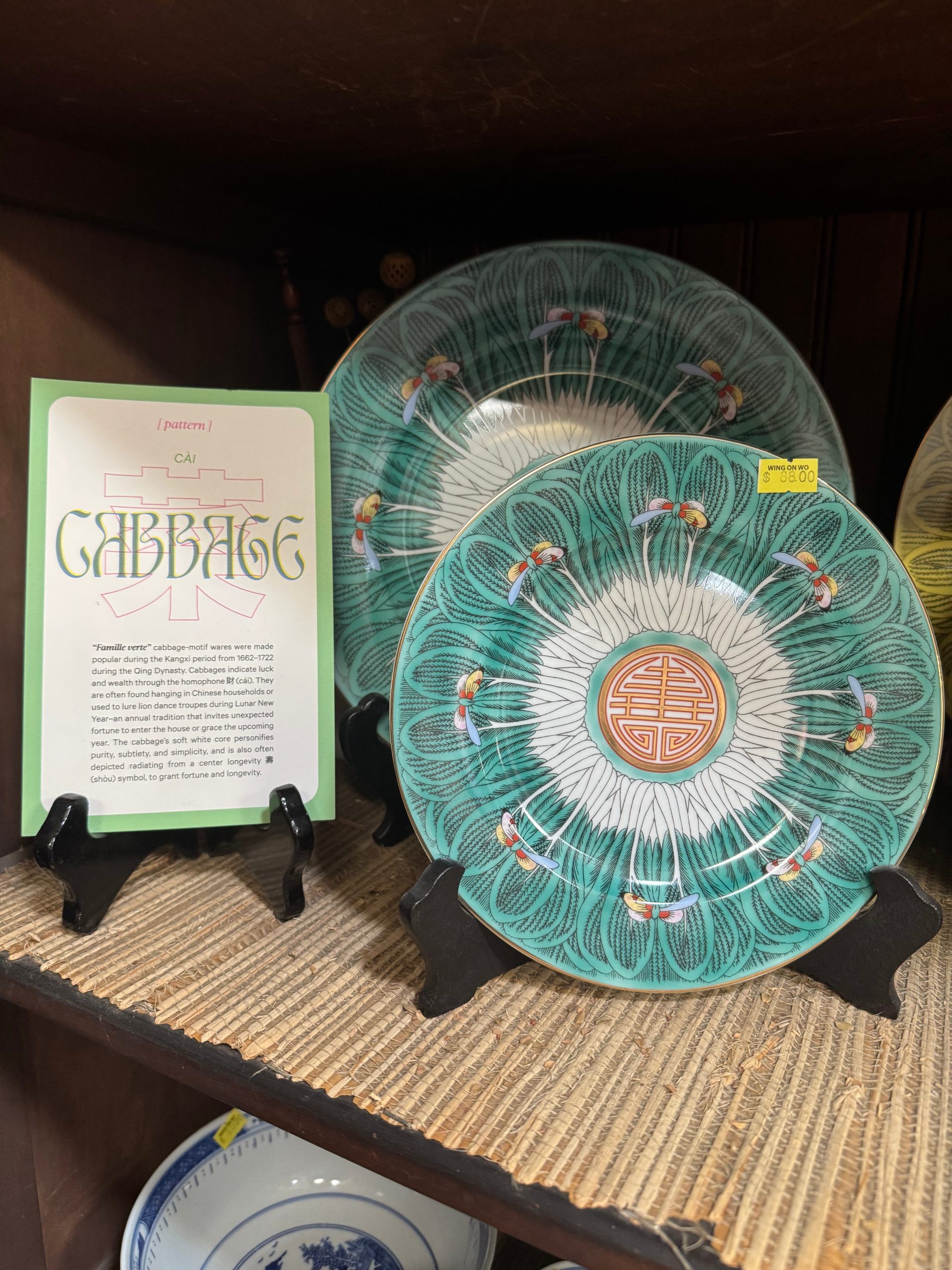
There’s also a particular pattern– “cabbage wear” pattern or “bok choy” pattern. In Chinese, the mnemonics of the name and word “cabbage” sound like prosperity. So the cabbage pattern is a very precious and cherished one that continues to carry significance to this day. My daughter has made these patterns more accessible by creating information placards on the shelves where we display classic pieces, and some that we’ve updated with collaborations with artists.
Q: What does it mean to you personally to be the fifth-generation owner of this historical store?
Gary: Oh, boy. I’ve been married into the family for 45 years this year. I’ve known this family since I was five years old, so you could say I’ve experienced family life times two, with my mother and father and my mother-in-law and father-in-law. I’ve been very fortunate in that way.
Maintaining the 100-year legacy has been a lifestyle. My wife and I, my two daughters, and my grandchildren have enjoyed family life without pressure. When you own a property, you’re not going to kick yourself out. You make enough to make ends meet, and we’ve been running this business intergenerationally and contributing time together. For me, I was a dad at home – my wife was out in the workplace providing – and I was here supporting my mother-in-law and father-in-law, continuing to run this business.
The immigrant and Asian family practices are represented by coming to the Americas, leaving the homeland, and digging and developing roots. One tangible way to do this is to buy property. So you own property, and you have a place to physically belong, grow, raise a family, and run a business. This physical property is a very, very special place in our hearts, in my heart.
I’m the superintendent of this property, so I know every nook, cranny, and corner of this building and all about how it is run, maintained, and improved. The legacy of this property really is a statement to Chinatown and anyone interested in the history of Chinatown that we are staying put here. We own this property. We’ve lived this lifestyle. We contribute culture, and my wife Lorraine and I are supporting my daughter’s stewardship of the business and her investment in the future of this community.
Q: Do you think you could tell us more about the WOW (Wing on Wo) Project? How did it come about, and how does it reflect your relationship with the Chinatown community?
Gary: My involvement with the WOW Project is very limited – I support it mainly by maintaining the physical space that it’s housed in. The WOW Project is a not-for-profit organization whose vision and mission are to awaken youth to a sense of agency for their future. The future belongs to you. My future has passed. I’m here to support you in launching out into the world, creating change, and developing confidence, ownership, and responsibility for the future.
The social issues that are in front of us, which we address through the WOW Project and other organizations that are in the same vein of awakening youth to responsibility, are: climate change, social issues around Chinatown, such as the impending construction of a mega jail, and the need for affordable housing. We need to contribute to all of these social issues, and we need to protest change that affects our lives and our communities directly through art and cultural offerings. That’s what the WOW Project is. Through arts and culture, we promote activism, engaging everyone in the community, young and old, in feeling a sense of comfort and ownership of our surroundings.
Q: How do you think gentrification is currently impacting Chinatown? And what role do you believe Wing on Wo will play in addressing these changes?
Gary: Gentrification is change and a natural progression of all neighborhoods that I’ve witnessed growing up. I’m 70 years old. Immigrant communities evolve over time, and they become more assimilated and have more representation in government at the local, state, and federal levels. As immigrants, we raise American offspring and we work hard, sending them to university. The aspiration for the immigrant family is to have their offspring assimilate, become American, and obtain reputable careers like a lawyer, doctor, or engineer. Oftentimes, we unfortunately push them away from our history and our culture.
Organizations like the WOW Project need to speak loudly and educate everyone within and outside the community through social media, informing and organizing so that gentrification goes in the right direction. Gentrification and the momentum that money and real estate development have often moved quicker than we can as people. Keeping the conversation going is the key. Right now, gentrification has Chinatown businesses transitioning to snacky, fast casual food like fried chicken and all sorts of provincial Chinese fusion food, like bubble tea and tea and lemon teas. The one thing that has not proliferated is ice cream. There are two ice cream places, Chinatown Ice Cream Factory and Soft Swirl, which is a good thing.
We have a lot of commerce going on. We have a lot of tour groups going on. The themed tour groups are interesting. Dumpling crawls and different food offerings and fusion food that’s offered in Chinatown is very interesting.
Q: What are your hopes and goals for Wing On Wo?
Gary: For me, I welcome everyone who comes through the doors and connect with them from a heartfelt place. It’s all about story, my story, and our story, and for those who come in, it starts at a very superficial level, and depending on that visitor’s comfort, it will go layers. Our conversations go deeper than “I want to sell you a teapot or a teacup.” My first connection isn’t about selling you something. I’m going to sell you a conversation and a connection that you feel comfortable with.
Wing on Wo is going forward with my daughter Mei, and everything that she’s put forth as owner of this business and the WOW project is everything that I had imagined. That’s where I see Wing On Wo going: bigger, better, more prominent, but not famous– it’s not about ego. It’s all about awakening the spirit, the spirit that’s in all of us. From our earliest beginnings as babies, we have creativity, and we’re allowed to use crayons on walls, on paper, and not make a particular figure, but we are freely expressing and letting our creative energy flow. I find that at middle school age, that part is shrunken and shut down, but we can’t let it.
Ultimately, I feel that the success, our success as people, is to support each other in a way that is inspirational, awakening, and elevating to each and every one of us. The conversations you have, the connections you have, have to be on the right side of humanity. It’s not about the sneakers that you bought or the cell phone that you have or the laptop that you have or the vacation that you go on or– we are more than that. And it’s about seeing each other for the real, true people that we are, the souls and spirits that are just waiting to be awakened by real conversation and connection.